Reading the water: what leak clues around drains, returns, lights, and skimmers tell you
Why the little clues matter
A swimming pool holds a lot of water, so a small drop in level can be hard to notice day to day. But the pool itself often leaves signs. Water moves in predictable ways, and when it finds an unexpected path, it tends to leave evidence around the fittings that penetrate the shell. Drains, return inlets, light niches, and skimmers are the most common places where a leak first shows itself. Learning to read those clues can save time, money, and frustration. It can also help you decide whether a simple fix is within reach or whether professional help is needed.
Most pool owners notice a drop in water level and assume evaporation. In hot, dry weather that is often the case. But when the water keeps falling past the skimmer mouth or the tile line, something else is going on. The trick is to look not at the water level itself but at the area around each fitting. Cracks, wet spots, air bubbles, or loose sealant all point to the same thing: water is moving where it should not.
Drains and the suction side
The main drain at the deepest part of the pool is a common source of leaks, but it is also one of the hardest to see. Water pressure pushes against the drain housing from the outside, so a crack or a failed gasket can let water escape into the ground below. The clue is often indirect. If you notice air in the pump basket or the pump struggles to prime, the suction side may be pulling air through a drain leak. Another sign is dirt or debris being drawn into the pool around the drain cover. That suggests the seal around the drain has broken and soil is being sucked in. A qualified technician can pressure-test the main drain line to confirm. That kind of test is not a DIY job because it requires specialized equipment and knowledge of the system.
Return lines and the pressure side
Return lines carry filtered water back into the pool through small inlets in the wall. Because these are on the pressure side, a leak here often pushes water out rather than sucking air in. The clue is a wet area near the pool shell, especially if the ground stays damp even when the pump is off. Sometimes a return line leak shows up as a small geyser or a stream of bubbles coming from the return fitting when the pump runs. That can also mean the line has cracked underground. The fix usually involves digging and pipe repair, which is best left to a professional. If you see water pooling near the equipment pad or along the side of the pool where return lines run, that is a strong signal to call for an inspection of pool equipment leaks.

Pool lights: water in the niche
A pool light housing is a sealed unit, but the seal can fail over time. When it does, water seeps into the light niche. The first clue is often a foggy or cloudy lens, or water visible inside the light. That is not just a cosmetic issue. Water inside the niche can corrode the electrical connections and create a safety hazard. If the light is still on, the water can cause a short. If the light is off, the water can still damage the fixture. The fix is to replace the gasket or the entire light assembly. This is electrical work near water, so it should be done by a qualified electrician or pool service professional. Do not attempt to open the light housing yourself while the power is on. Turn off the breaker first, and then call a pro.
Skimmers: the most visible clues
The skimmer is the rectangular opening at the waterline where leaves and debris are collected. It is also one of the most common places for a leak. The skimmer housing is set into the pool wall and sealed with a gasket or caulk. Over time, that seal can crack or pull away. The clue is water that continues to drop past the skimmer mouth even after you fill the pool. Another sign is a crack in the skimmer throat, the area just below the opening. If you see water dripping from the skimmer housing on the outside, or if the ground near the skimmer is constantly wet, the seal has failed. Sometimes the leak is in the skimmer weir, the flap that controls water flow. A broken weir can cause the skimmer to lose prime, which makes the pump run dry. That can damage the pump. A simple check is to fill the pool to its normal level and then turn off the pump. Mark the water level and check it 24 hours later. If the drop is more than what evaporation would cause, the leak is likely in the skimmer or the plumbing connected to it.
What the clues add up to
None of these signs alone guarantees a leak. Evaporation, splash-out, and normal wear can mimic a leak. But when you see two or three clues together, the probability goes up. For example, a wet spot near the skimmer plus a constantly dropping water level is a strong indicator. Similarly, air in the pump basket plus a cloudy light lens suggests two separate issues, both of which need attention. The key is to observe over a few days and note any patterns. Do not rely on a single reading. Check the water level at the same time each day, with the pump off. If the drop is consistent and more than a quarter-inch per day in calm weather, it is worth investigating further.
When to call a professional
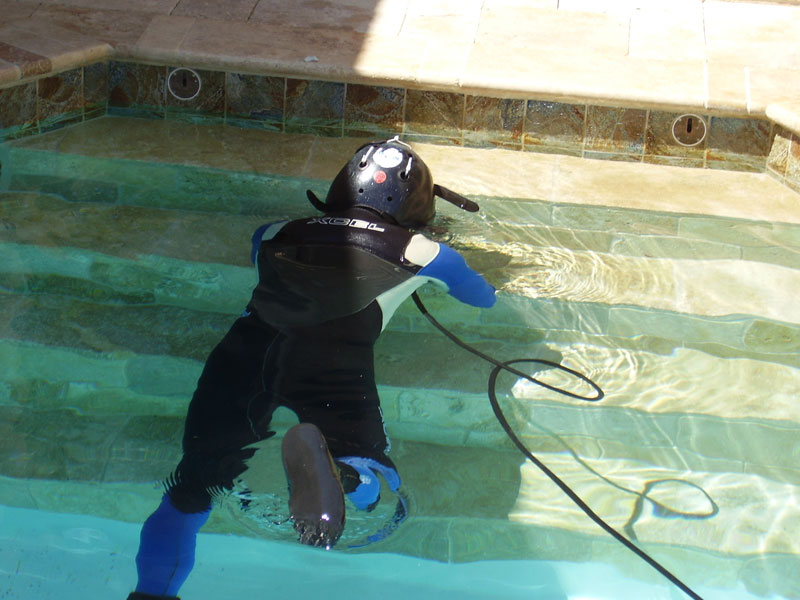
Some leak checks are simple. You can inspect the skimmer gasket visually. You can check the pump lid O-ring for cracks. You can listen for hissing sounds around the equipment pad. But most leaks in the shell or the underground plumbing require pressure testing, dye testing, or even thermal imaging. Those methods are beyond the scope of a homeowner. A professional leak detection service has the tools to isolate the leak without digging up the yard unnecessarily. They can also perform an inspection of pool equipment leaks that covers the pump, filter, heater, and all valves. That kind of inspection is thorough and can catch problems before they become expensive repairs.
Prevention and early action
The best time to look for clues is during routine maintenance. When you skim the surface, check the skimmer throat for cracks. When you clean the pump basket, inspect the gasket. When you brush the walls, look at the light lens. A few seconds of attention each week can catch a small issue before it turns into a big one. If you do find a clue, do not ignore it. A small crack in a skimmer seal can be fixed with a tube of silicone. A loose light gasket can be replaced. But if the leak is in the plumbing or the shell, the sooner it is addressed, the less damage it will cause. Water that escapes the pool can undermine the surrounding soil, damage the deck, and even cause the pool shell to shift. That is a much bigger repair than a simple seal replacement.
In short, the pool tells you when something is wrong. The clues are around the drains, returns, lights, and skimmers. Learning to read them is a practical skill that every pool owner can develop. It does not require special tools or training. Just a willingness to look closely and a bit of patience. And when the clues point to a problem that is beyond a simple fix, calling a professional is the smart move. A small investment in a leak detection service now can save thousands in structural repairs later.